AI-Generated Video vs Professionally Shot Video: Which Should Your Brand Use?
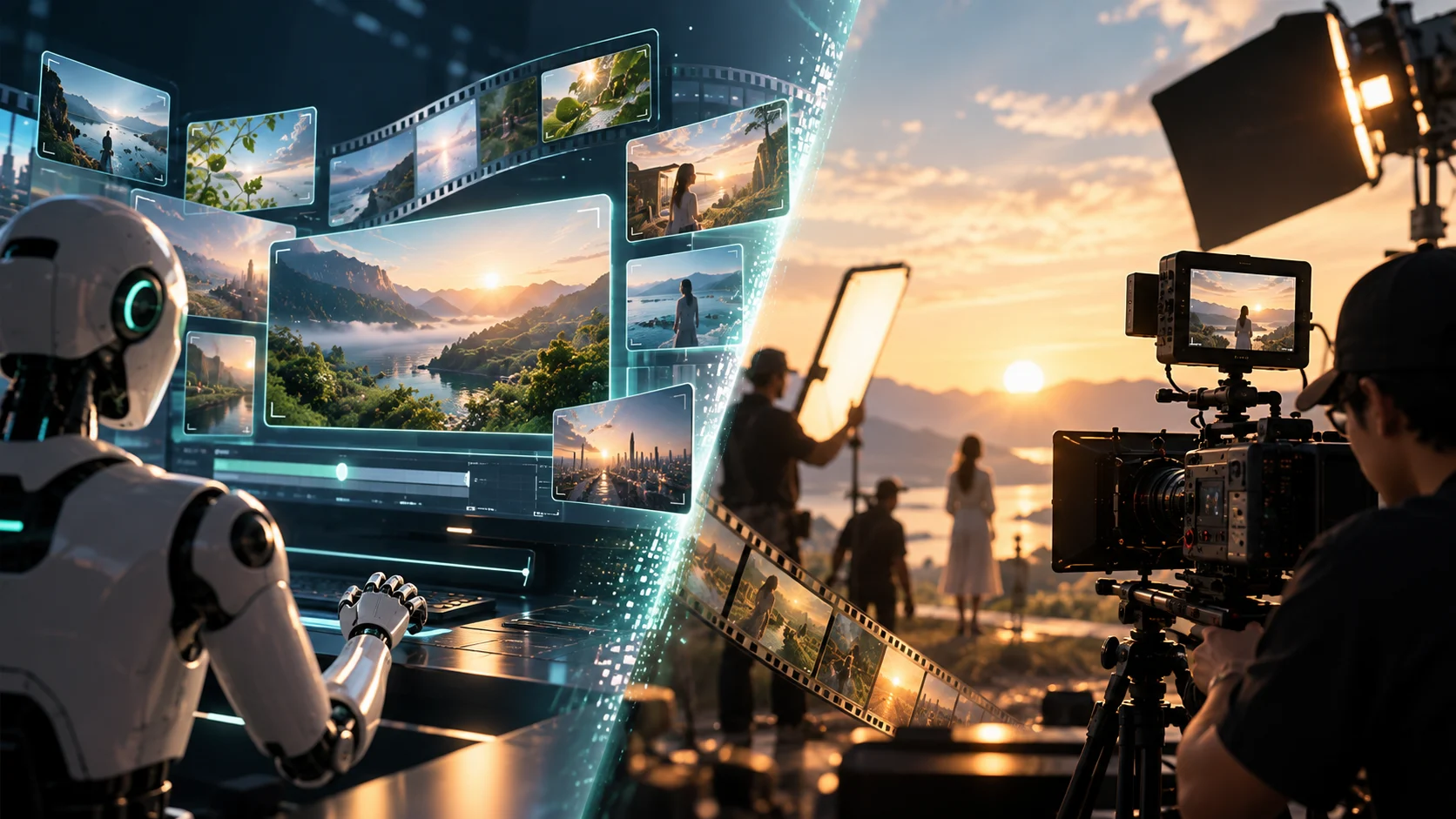
I wrote before about the human-vs-AI question in general terms. This one’s more specific, because I think brands need a sharper answer than “it depends” when they’re actually choosing between these two options for a real project. So here’s how I’d actually lay it out, side by side.
What each one actually is
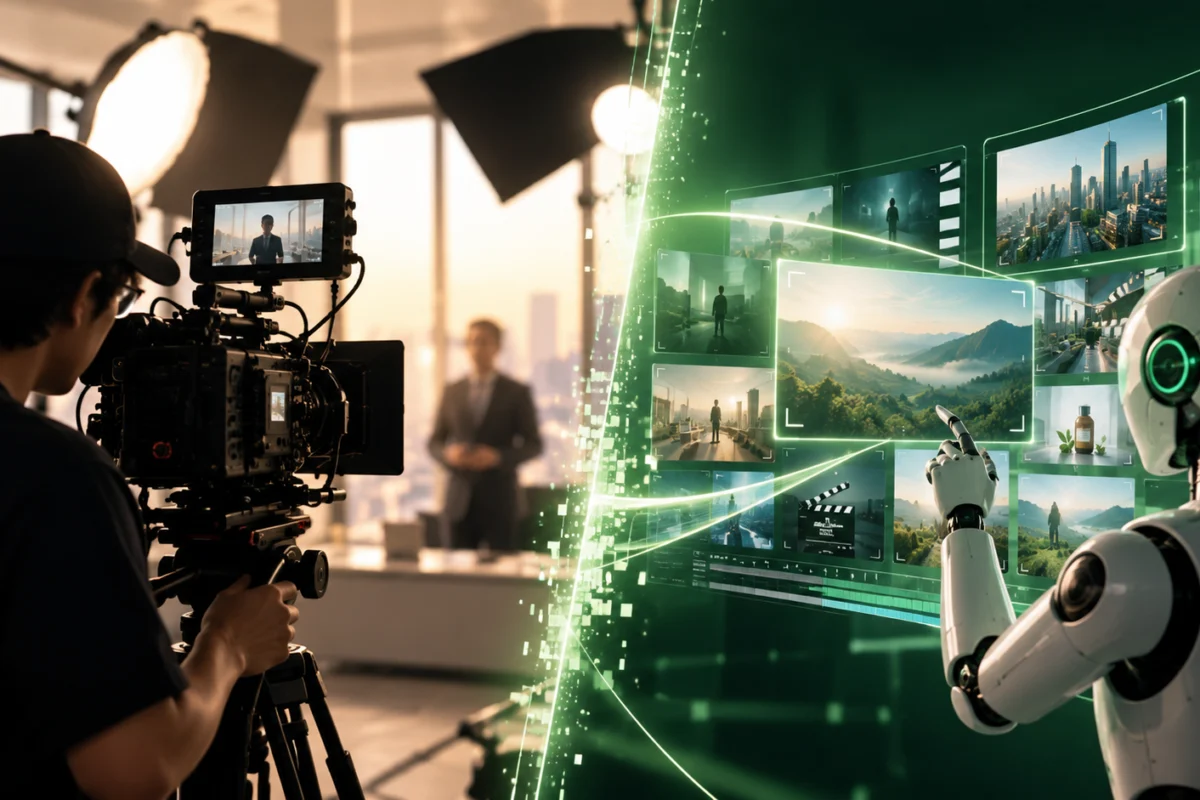
AI-generated video means footage created from a text prompt or AI tool, with no camera, no crew, and often no real people involved at all. Tools like Sora, Runway or Veo fall into this category.
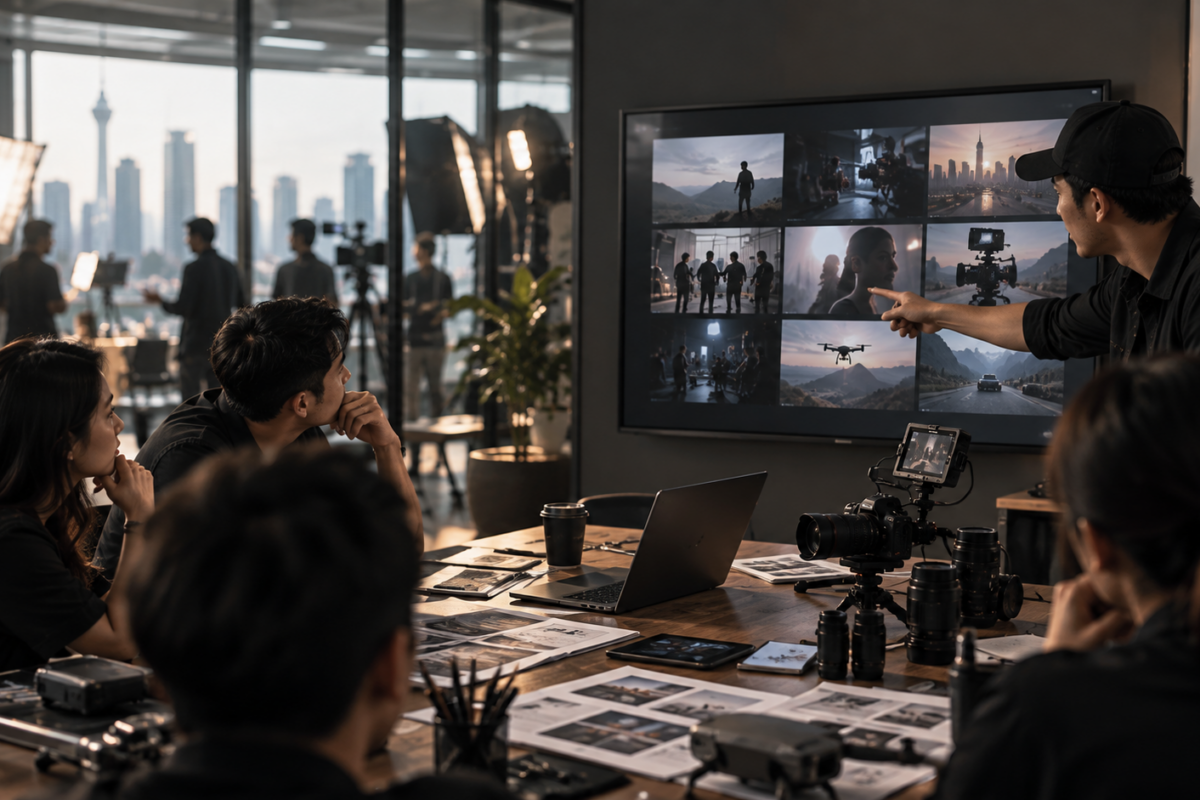
Professionally shot video means a real production — a person directing, a camera capturing real people or real products, and a producer managing the whole thing from brief to delivery.
They’re not two versions of the same thing. They’re genuinely different tools, and brands lose money when they pick one expecting the strengths of the other.
Where AI-generated video wins
| Speed | Can go from idea to finished clip in a fraction of the time a shoot would take |
| Cost | Significantly cheaper, especially for short-form content |
| Good for | Social media clips, quick concept tests, internal content, low-stakes announcements |
| Scalability | Easy to produce variations quickly for A/B testing messaging |
Where professionally shot video wins
| Trust and consistency | A real spokesperson, a real product, the same face and tone held consistently across every piece |
| Brand representation | What investors, clients and candidates actually judge your company by |
| Judgment on the day | A producer who can read the room, solve a problem on set, and make the fifty small calls that come up during any real shoot |
| Good for | Company profile films, investor materials, campaigns, anything tied to how your brand is actually perceived |
The mistake I see brands make
The most common one is using AI-generated video for something that needed to carry real trust — an investor pitch, a company profile, a campaign meant to run for months — and having it come across as slightly off in a way they can’t quite name. Viewers pick up on that faster than brands expect. The second most common mistake is the opposite: spending a full production budget and days of shoot time on a piece of content that was only ever going to live on Instagram for a week.
The decision isn’t about which technology is “better.” It’s about matching the tool to what the video actually needs to do for your brand.
How I actually use both
In my own production work — including projects for brands like Nestlé, Sharp, Great Eastern and Amway — I don’t treat this as an either/or. I’ll use AI for storyboarding and some post-production work, which has cut costs and turnaround time significantly. But for the core of a corporate video, especially anything representing the brand to a client or decision-maker, I still shoot it properly, with real people and real direction. That combination tends to get brands the best of both: lower cost on the parts AI handles well, without losing the consistency and trust that still needs a human behind the camera.
A quick way to decide
If the video is short-lived, low-stakes, or needs to move fast — AI-generated or AI-assisted is usually the right call. If it’s going to represent your brand to someone deciding whether to trust, invest in, or work with you — shoot it properly. If you’re not sure which category your project falls into, that’s worth a five-minute conversation before you commit either way. Send me your brief and I’ll give you a straight answer.
Joshua Lim, filmmaker, producer and photographer, Precious Media Productions.
Corporate video production in Malaysia → · AI video production in Malaysia → · AI video production across Asia →