Should Your Corporate Video Be Shot by a Human or Made with AI?
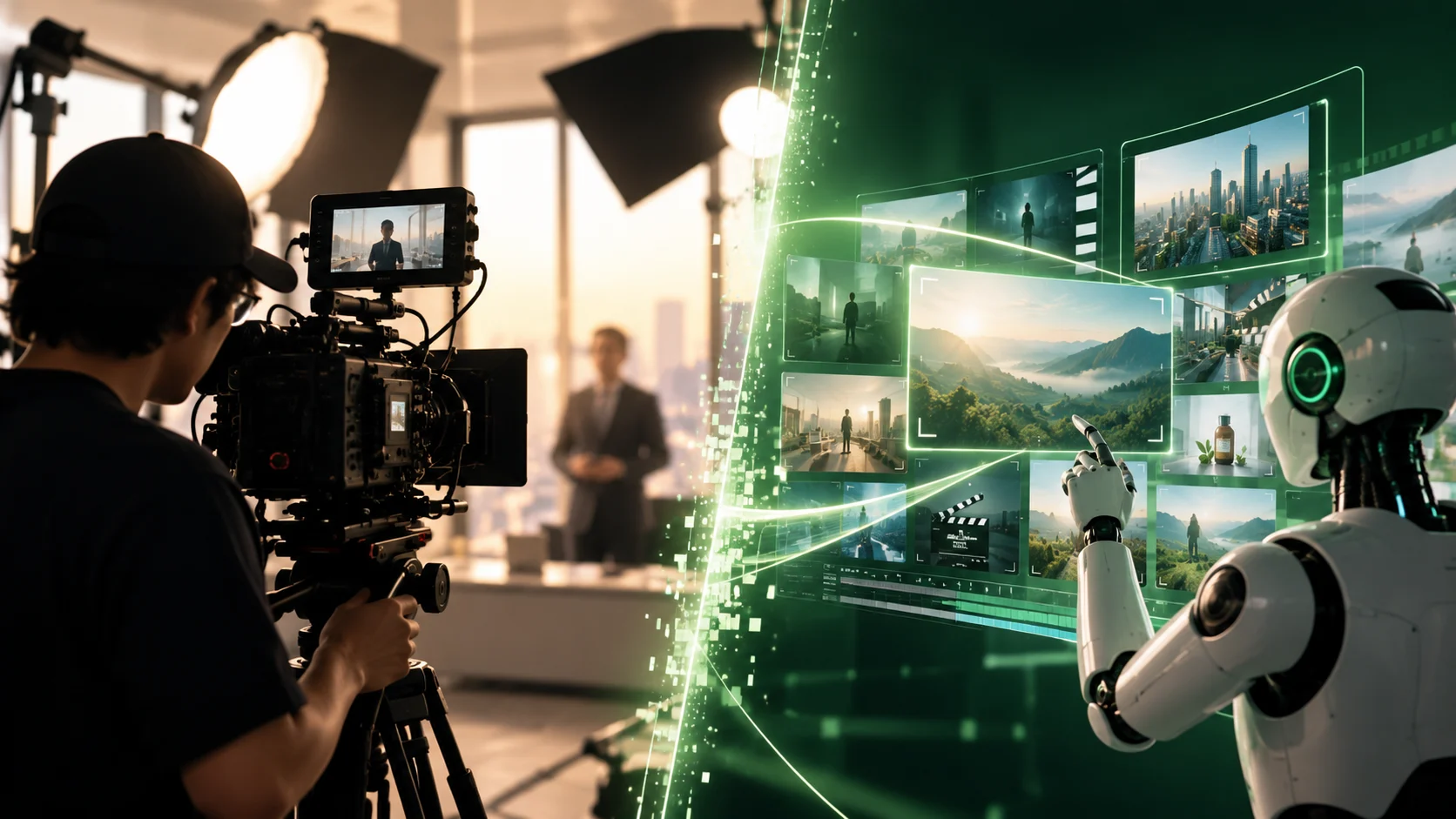
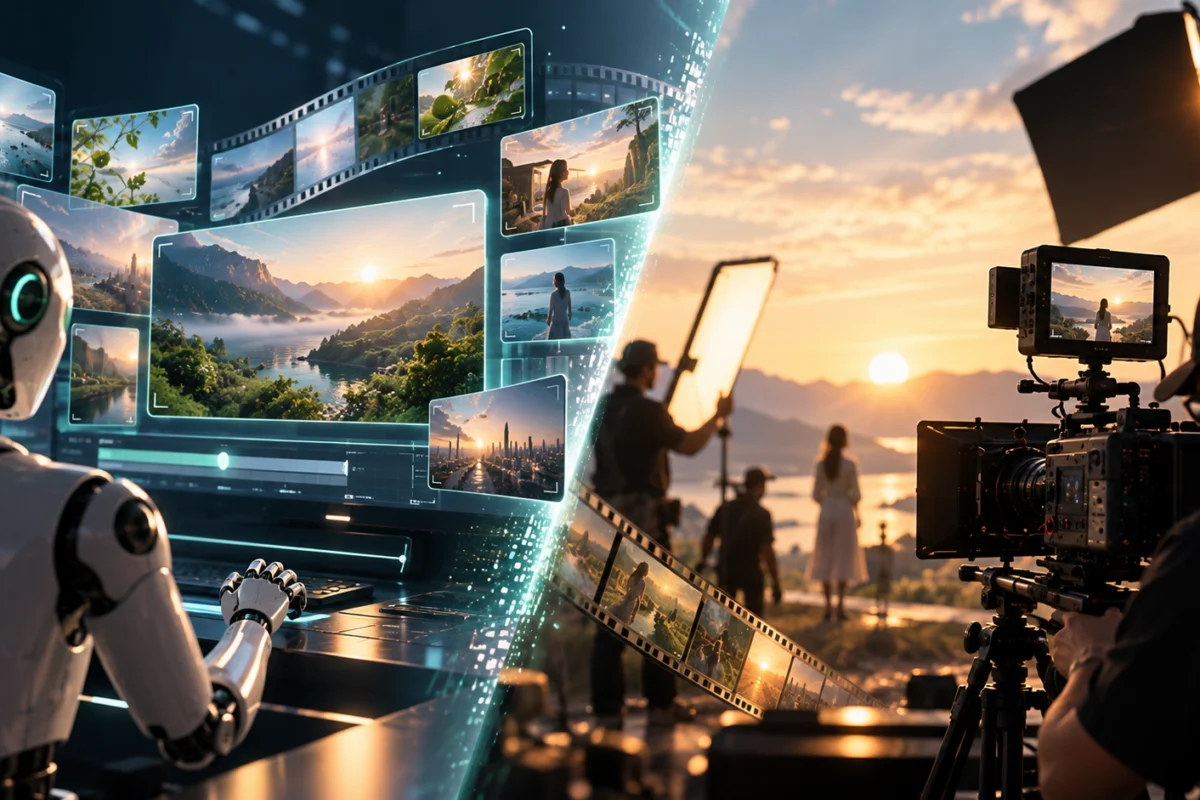
This question comes up almost every time I’m talking to a new client now, usually somewhere in the budget conversation. It’s a fair question, and I don’t think the honest answer is “always hire a human” or “AI is the future, skip the crew.” It actually depends on what the video is for, and I think most companies are asking the wrong version of this question.
The right question isn’t “human or AI.” It’s “what is this video actually going to do for my company, and which approach gets that done properly.”
What AI is genuinely good at right now
I use AI in my own workflow, so I’m not saying this from the outside. Storyboarding with ChatGPT has replaced a process that used to take me close to a month with an illustrator and copywriter — now a client can see the visual direction almost immediately, and decisions get made faster because of it. For heavy post-production work — compositing, VFX, the kind of thing that used to need a full team — AI tools have brought the cost down close to 10 times compared to a few years ago. If your corporate video needs quick social content, internal announcements, or something disposable with a short shelf life, AI-assisted or even fully AI-generated video can genuinely do that job well, and cheaply.
Where it still doesn’t hold up
The things AI can’t do are mostly invisible until they go wrong. It doesn’t sit in the briefing call and catch the detail a client mentions once that changes the whole direction. It doesn’t read a nervous spokesperson on set and adjust. And consistency is still a real problem — ask an AI tool to keep a face, a product or a brand’s tone identical across ten clips, and it tends to drift. For a single throwaway clip, that doesn’t matter. For a corporate video that’s going to represent your brand to investors, clients or candidates deciding whether to work for you, that drift is exactly the kind of thing that quietly undermines trust.
The actual decision point
Here’s roughly how I’d think about it, having sat on both sides of this conversation with clients:
Go with AI, or AI-assisted production, if the video is short-lived, low-stakes, or needs to move fast — a social clip, an internal update, something testing a message before you commit real budget to it.
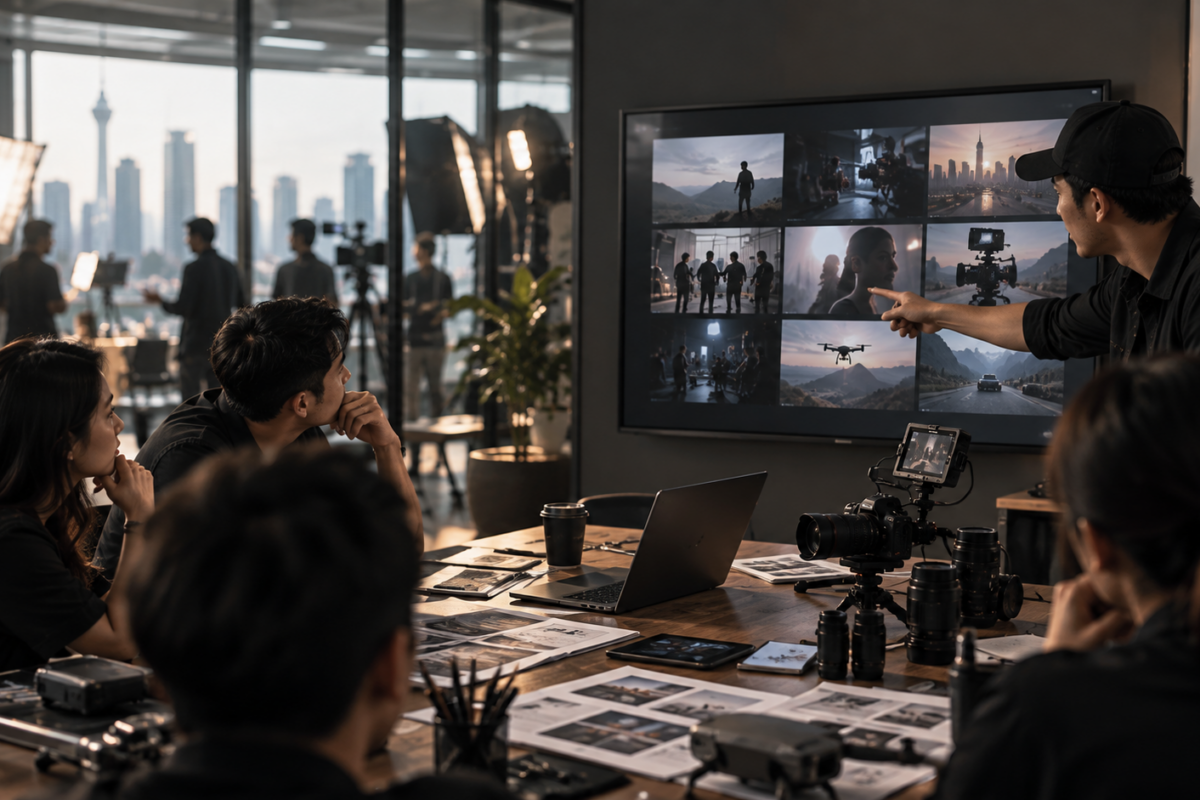
Go with a proper human-led shoot, if the video needs to represent your brand to someone making a decision about you — an investor deck, a company profile, a campaign that needs to look consistent across multiple pieces, anything where the people and the trust being built are the actual point.
A lot of the corporate work I do — for brands like Nestlé, Sharp, Great Eastern and Amway — sits firmly in that second category. Nobody’s deciding whether to trust a multinational FMCG brand based on a video that looks slightly off. That’s precisely where the judgment calls of an actual producer still matter more than the tool.
The honest middle ground
Most of the corporate videos I produce now aren’t purely one or the other. I’ll use AI for the storyboard, sometimes for rough edits or post-production elements, and still shoot the core of it properly — real people, real direction, a producer actually managing the day. That combination is usually what gets a client the best outcome: lower cost and faster turnaround on the parts AI handles well, without losing the trust and consistency that still needs a person in the room.
If you’re trying to work out which side of that line your project falls on, that’s exactly the kind of thing worth a five-minute conversation before you commit to either approach. Send me your brief and I’ll tell you straight which one actually makes sense for what you’re trying to do.
Joshua Lim, filmmaker, producer and photographer, Precious Media Productions.
Corporate video production in Malaysia → · AI video production in Malaysia → · AI video production across Asia →