What Is AI Video Production? A Filmmaker’s Honest Take
I've been getting this question a lot lately, usually from a client halfway through asking something else. "Could we just do this with AI?" It's a fair question.…
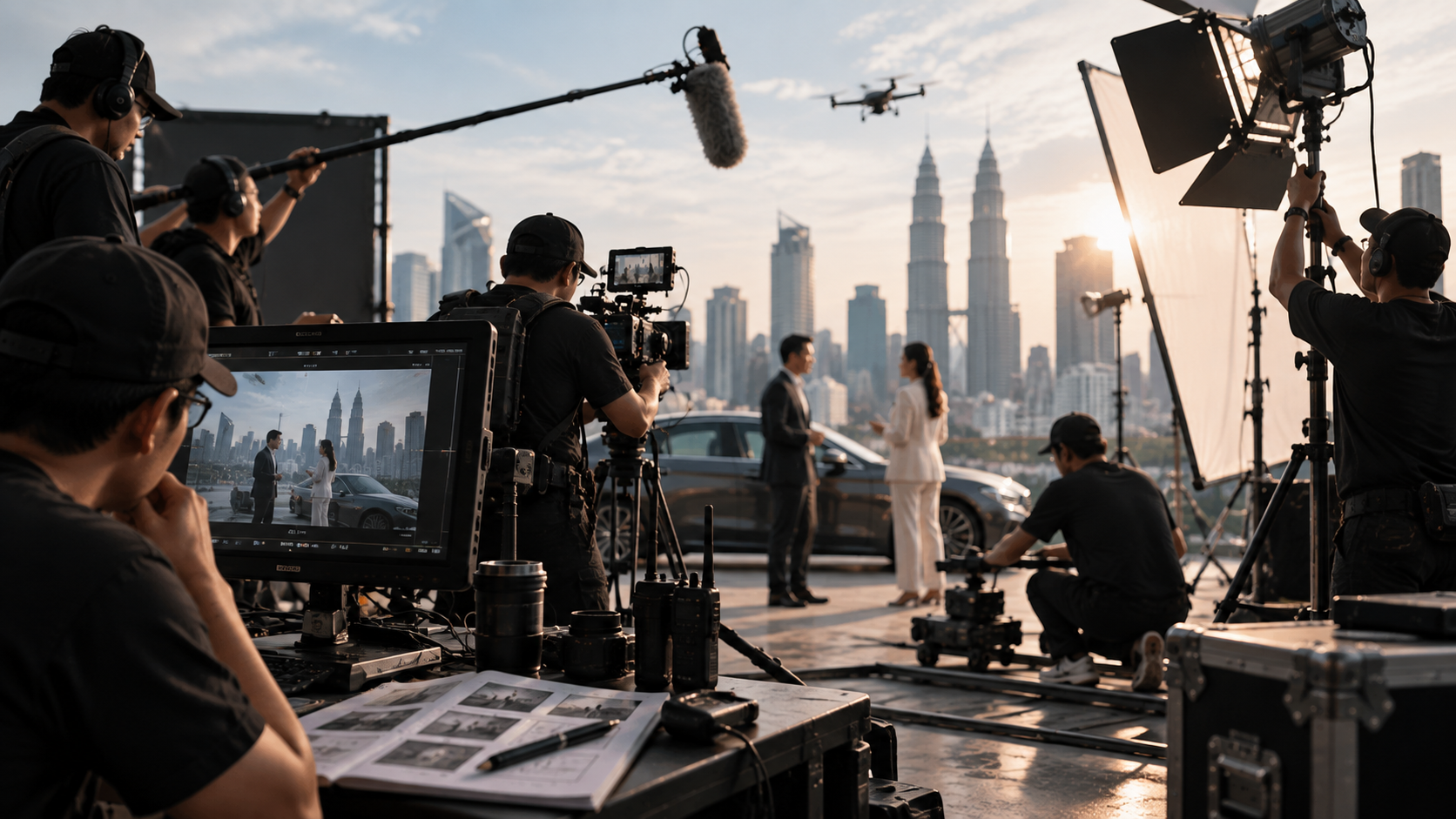
I’ve been getting this question a lot lately, usually from a client halfway through asking something else. “Could we just do this with AI?” It’s a fair question. I don’t think it has a simple answer, so instead of writing another generic explainer, I figured I’d just write down what I actually think, after fifteen years of doing this the normal way.
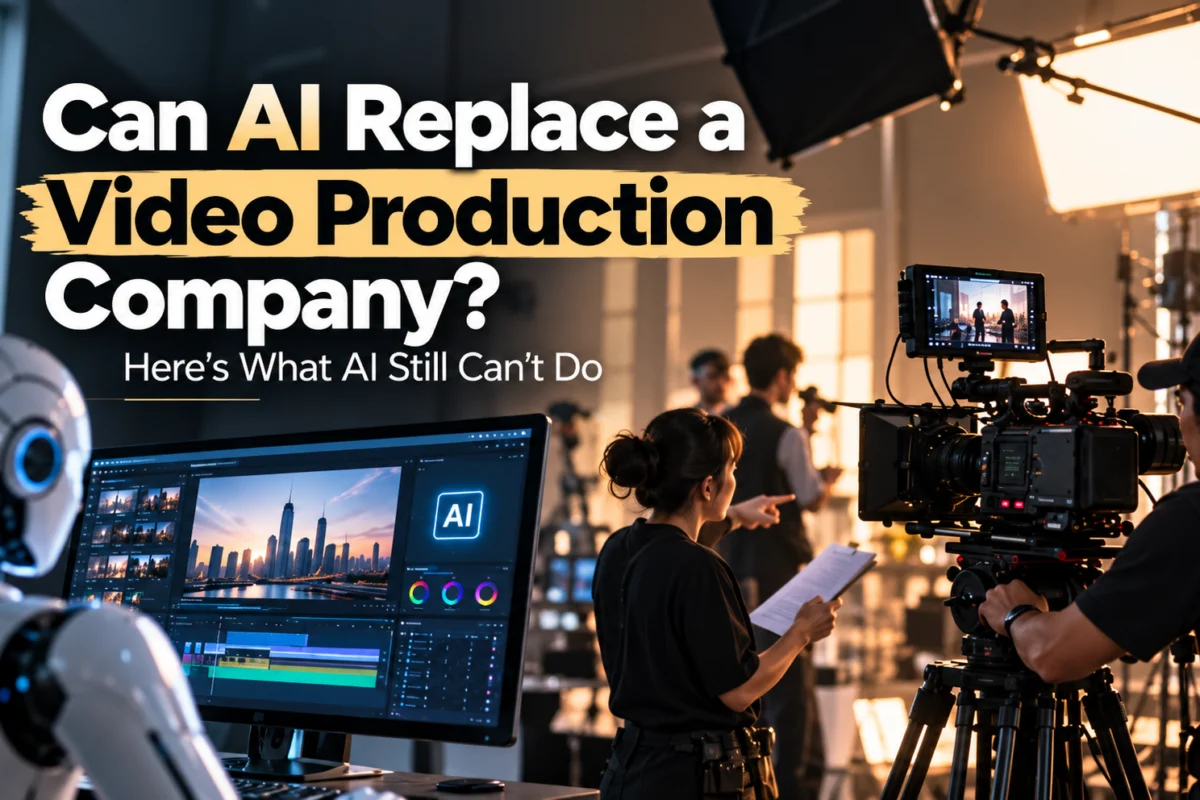
AI video production isn’t really one thing. Sometimes it means a video made entirely by AI — no camera, no crew, just a text prompt and a tool like Sora or Runway doing the rest. Other times it just means AI sitting somewhere inside an otherwise normal shoot — writing a rough draft of a script, cleaning up audio, generating subtitles, speeding up a rough cut. Those are very different things, but people lump them together under the same phrase, and I think that’s where a lot of the confusion comes from.
Where I think it actually earns its place
If I’m honest, the biggest thing is cost. Before this, if a corporate client wanted something high-end — anything needing After Effects work, VFX — you were looking at hiring a whole team. Compositors, animators, motion designers, sometimes a small army of people just for a few seconds of footage. That used to be the expensive part of the whole production. Now, with the right AI tools, I can bring that cost down by close to 10 times compared to what it used to be. And it’s not just cheaper — it’s faster too. The catch is you still need to know how to actually use the tools properly, how to prompt and direct them, or you just end up with something unusable. It’s not a magic button. But for anyone who knows what they’re doing, this really is a new era for the whole industry.
Storyboarding is the other one. I’ll use ChatGPT to put together a storyboard now instead of booking an illustrator and a copywriter separately. That used to be a whole process on its own — sometimes a full month just to get the storyboard approved, before a single frame was even shot. Now I can turn that around in a fraction of the time, and the client gets to see something visual almost immediately. Decision-makers move faster when they can actually see the idea instead of reading a script and imagining it. That alone has changed how quickly a project gets greenlit.
Where it still falls apart for me
This is the part most people don’t want to write, because it’s less exciting than the first half. But it’s the honest half.
AI doesn’t sit in the briefing call. It doesn’t know that the client mentioned, almost as an aside, that their last agency used the wrong shade of their brand colour and they’re still annoyed about it. It doesn’t know how to read a room on set when the talent’s nervous, or improvise when a location falls through an hour before call time. Those moments come up more than people expect, and they’re still decided by a person standing there, not a tool.
And there’s a consistency problem nobody talks about enough. A face, a product, a brand’s tone — ask an AI tool to generate that across ten different clips and it drifts. Sometimes slightly, sometimes a lot. For one quick clip, fine. For a campaign that needs to look like it came from the same place, I haven’t seen it hold up yet.
So will it replace what I do?
Not the work I do, no. Not soon, anyway. I think AI is going to keep getting better at generating footage and cutting down the heavy, expensive parts like VFX — that part’s already happening. What I don’t see it doing is running an actual shoot day, managing a nervous client, or making the fifty small calls a producer makes without even realising they’re decisions.
Where I’d actually point a client
If someone just needs a quick, disposable clip for social media and the budget’s tight, I’ll be honest and say AI tools can do that job fine. But if it’s something that’s going to represent your brand to a client, an investor, or the people deciding whether to hire you, I still think it’s worth shooting properly. That’s where the judgment calls still matter more than the tool.
I don’t think AI and real production are really in competition, not for the kind of work I do. They’re just different tools for different jobs, and I think the people who figure out which is which, project by project, are going to end up ahead of the people arguing about which one wins.
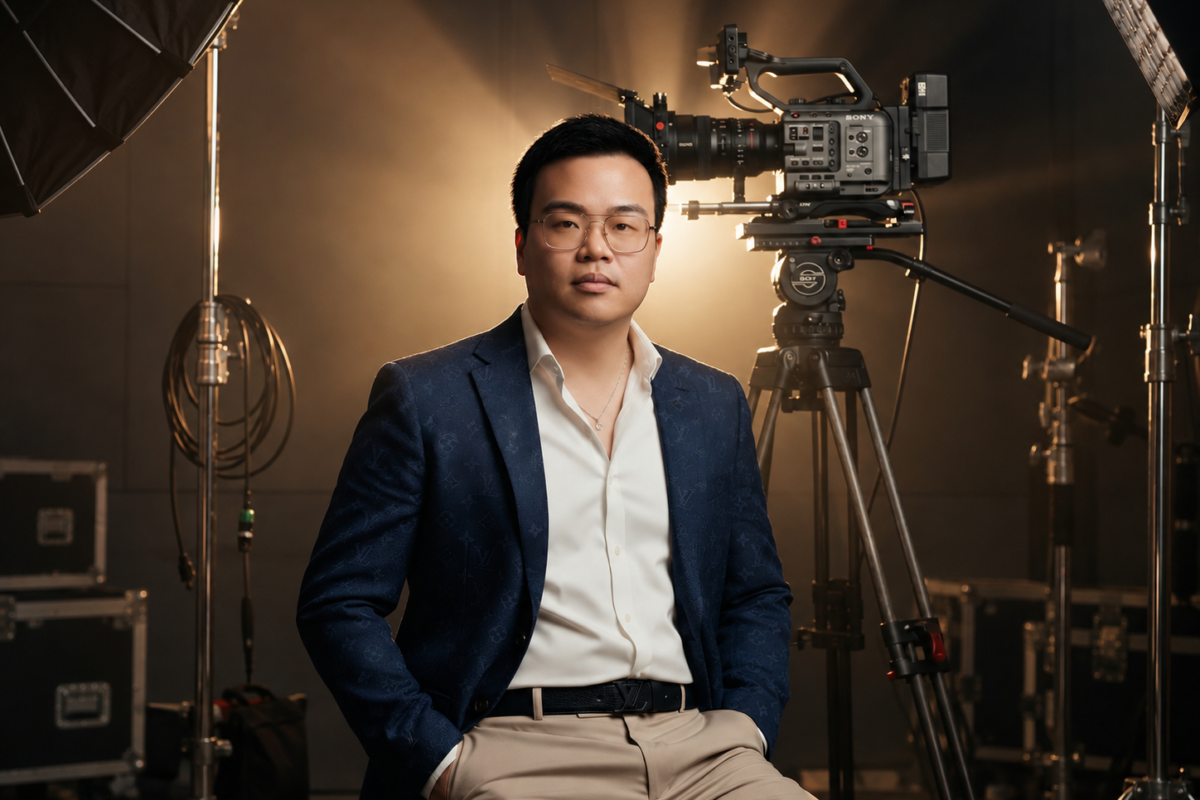
Joshua Lim, filmmaker, producer and photographer, Precious Media Production. Branding consultant: Serah Siew, Creative Director and founder of HummingDe Consultancy.
Corporate video production in Malaysia → · AI video production in Malaysia → · AI video production across Asia →